Housewarming party etiquette in Malta mostly comes down to three groups of people: your guests, your flatmates and the neighbour on the other side of a wall that is thinner than it looks. If you rent here in your twenties or early thirties, there is a good chance you live in a block in Sliema, Gżira, Msida or St Julian’s. In those blocks a stone stairwell carries every laugh up four floors, and the administrator has firm views about who uses the roof.
The good news is that a housewarming here doesn’t need to be complicated. Maltese hosts tend to be generous and informal, guests bring something small, and everyone forgives a flat that’s still half in boxes. The bad news is that summer heat, impossible parking and buses that thin out later in the evening can turn a nice afternoon into a logistics puzzle if you don’t plan for them.
This guide covers what to bring as a guest and how to host without falling out with the block. It also explains what Maltese law actually says about noise, then gives seven worked-example housewarming plans with who pays and three messages you can copy and paste.
Housewarming party etiquette Malta: the unwritten rules
In many Maltese families a new home gets two housewarmings. The first is for relatives: your mum inspects the kitchen and someone asks how much the rent is. The second is for friends. Expats and students usually skip the family round, but the friends’ version follows similar unwritten rules, and here they are in one place.
- Your flatmates sign off first. It’s their home too. Agree the date, the guest count and which rooms are off limits before a single invite goes out.
- Give a window, not a start time. “Drop in from mid-afternoon” works better than a fixed hour, because people can come and go and the flat never gets overcrowded.
- The tour is expected. People want to see the balcony, the view (or the lack of one) and the bathroom. Close any doors you don’t want opened.
- Shoes are your call. Plenty of Maltese homes are shoes-on, with tiles everywhere. If yours is shoes-off, say so in the invite so nobody is caught out at the door.
- Gifts are small and expected. Nobody needs to turn up with a full set of kitchen knives. A bottle or a plant is the norm.
- The host feeds people. Even a casual housewarming implies food, and arriving guests will look for it.
If you’re combining the housewarming with a birthday, our birthday plans with costs and who pays explains how the bill usually splits when two occasions overlap.
As a guest: what to bring and how to behave
Gift ideas that actually get used
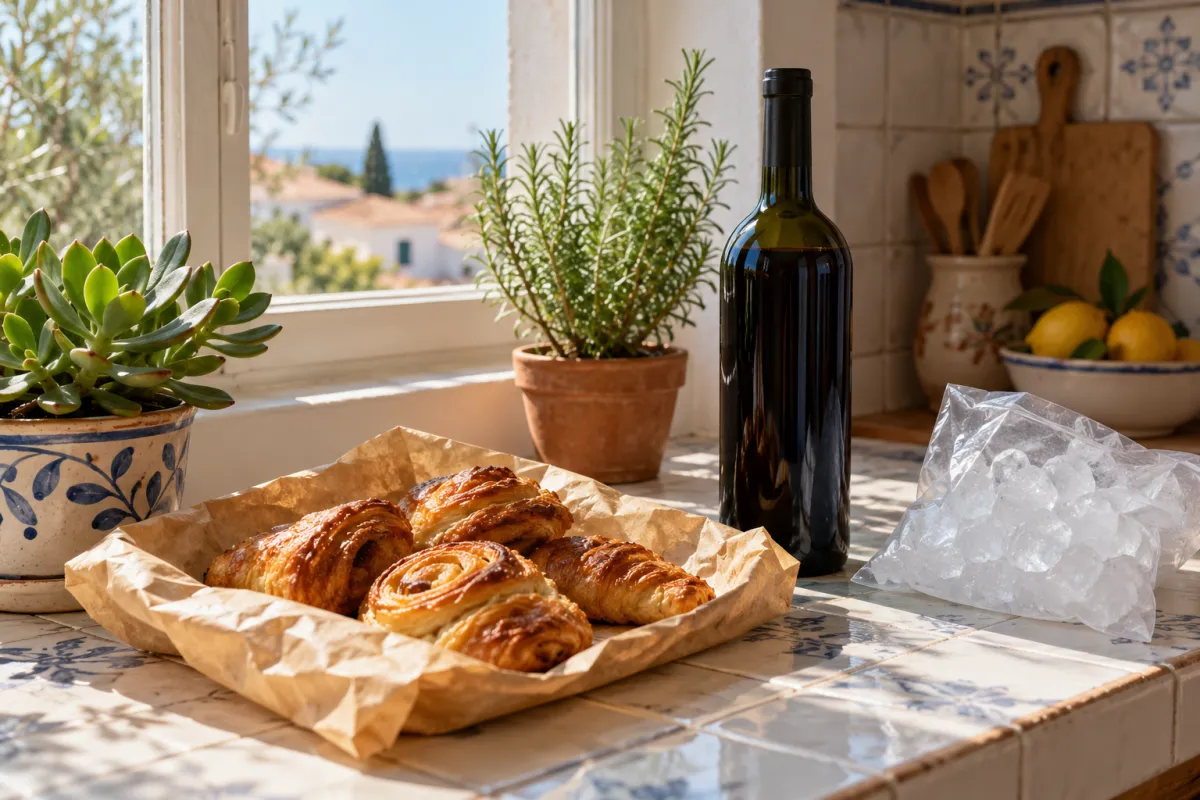
- A bottle of local wine. Maltese and Gozitan bottles are easy to find in supermarkets, and they are a safe, welcome choice.
- A plant that survives Malta. Succulents, herbs such as basil or rosemary, or a small olive tree for the balcony all do well. Delicate indoor plants tend to suffer in a hot, humid flat in summer.
- Something from a bakery or pastizzeria. A tray of pastizzi or qassatat always disappears. They are best warm, so bring them in with you instead of leaving them in a hot car.
- Practical things new tenants never have. Think of a bag of ice in summer, a decent corkscrew, ice-cube trays, a good tea towel or a few matching glasses.
Arriving and leaving
Maltese time is real at private parties. If you arrive at the exact stated time, you will probably watch the host finish tidying, so turning up within the first hour or so is polite. If you want to bring someone, ask first by message, not at the door. When you leave, say goodbye inside the flat, not on the landing. Stairwells in older blocks echo, and long goodbyes on the stairs are the most common way a housewarming annoys the neighbours.
Small things that matter
- Ask before smoking on the balcony. In a block, smoke drifts into the flat above and onto the washing hanging below.
- Offer to take the empties down to the recycling, but first ask which day the host’s locality collects glass. Bags left out on the wrong day can lead to a complaint.
- Don’t post the address, or a video showing the building’s entrance, on social media.
- Help with one round of tidying before you go, even if the host says no the first time.
As a host: invites, numbers, food and who pays
How many people fit
Count your seats, then allow for a few people standing. Most rented flats here are compact, the lift (if there is one) holds about three people, and a crowded room gets hot fast in summer. A good rule of thumb: if some guests would end up in the stairwell, you’ve invited too many. For a bigger crowd, split the housewarming into two smaller gatherings or move part of it out of the flat, as in some of the plans below.
Food and drink
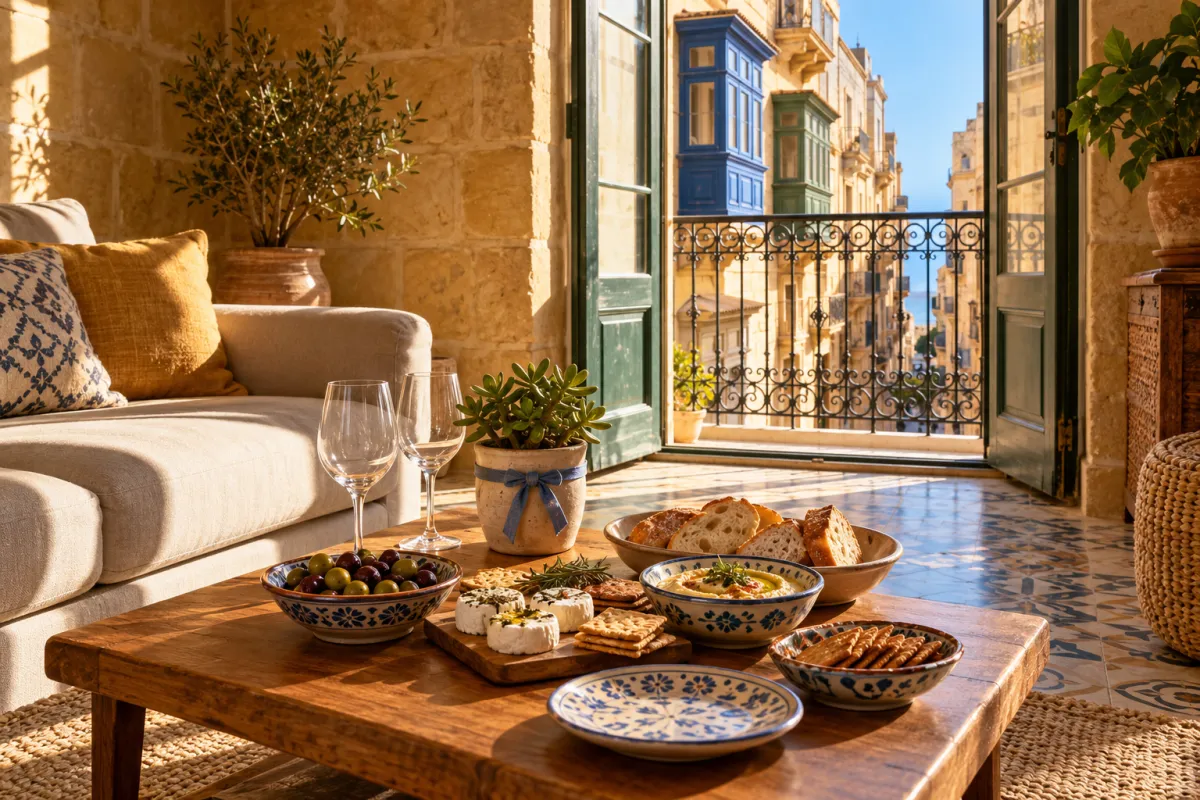
The host provides the food and guests usually bring drinks. A Maltese-style platter does a lot of work for very little effort. Put out ġbejniet (small sheep’s cheeses), bigilla (a bean dip), galletti crackers, olives, sun-dried tomatoes and crusty Maltese bread. In summer, add plenty of bottled water and ice. In winter, tiled flats get cold and damp, so add something hot such as soup or a baked pasta.
Who pays
| Part of the housewarming | Usual arrangement |
|---|---|
| Food at the flat | Host pays |
| Drinks at the flat | Host provides some, guests bring a bottle |
| Potluck version | Everyone brings a dish and no money changes hands |
| Moving on to a restaurant or bar | Pay your own or split, agreed in the invite |
| Joint gift from a group | Split between the people giving it |
The golden rule is to say it in the invite. Nobody in Malta minds paying their share. What causes awkwardness is finding out at the restaurant.
Is your flat too small, or do you want to meet new people? Keep your home for people you know and take the social side out to a public place. MeetNow that works in your browser, starting in Malta (the Android app is on Google Play; the iPhone app is not in the App Store yet), is built for this: a host posts a plan at a café, bar or restaurant with a time, seats and who pays, then picks who joins.

Noise, neighbours and what Maltese law says
Ask around and someone will swear you can play music as loud as you like until a certain hour. That cutoff doesn’t exist in law. Under the Code of Police Laws (Chapter 10 of the Laws of Malta), neighbour noise is dealt with case by case as a breach of the peace or a nuisance, so police can step in at any hour if noise is persistent and unreasonable (Legislation Malta).
Night-time is where it gets more serious. Article 338 of the Criminal Code lists contraventions against public order, including disturbing inhabitants at night in a way that interferes with their rest and quiet (Criminal Code, Chapter 9). In plain terms, an afternoon gathering with music at a normal volume is fine. A speaker on the balcony while the block is trying to sleep is not.
Block and condominium rules
If you live in a block, the administrator’s house rules sit on top of the law. Many blocks restrict gatherings in common areas, use of the roof and noise in stairwells and courtyards. Check before you promise anyone a roof party: the roof often belongs to all the residents, or to the owner of the top flat, and not to you.
Short-let flats
You might be thinking of renting a short-let for the party because your own place is too small. Licensed short-term rentals must keep a designated contact person reachable 24/7 to deal with neighbour noise complaints (Subsidiary Legislation 409.24). That means the operator hears about any noise quickly, and many listings ban parties outright, so read the house rules before you book.
Being a good neighbour, in practice
- Put a note under the neighbours’ doors or in the block chat a few days ahead. There is a template below.
- Invite the neighbours you’re friendly with, because people rarely complain about a party they were asked to.
- Turn the music down and move everyone in from the balcony as the evening goes on.
- Finish any DIY before the day. The Building and Construction Authority sets rules on when noisy works are allowed, and drilling holes for shelves on a Sunday morning puts you on the wrong foot with the whole block.
Seven housewarming plans, worked out
The cost of each plan depends on your shopping and the size of the group, so the cards describe costs instead of quoting prices. What matters for etiquette is who pays, and every card spells that out.
1. The open-house afternoon
- What: a drop-in window where people come and go, with a platter, cold drinks and a tour. It is the most relaxed format and the easiest on the neighbours.
- Where: your flat, including the balcony outside the hottest weeks of summer.
- Cost in EUR: the host buys snacks and soft drinks. Guests pay nothing beyond an optional bottle or plant.
- Who pays: host pays.
- How long: a window of three to four hours. Most guests stay an hour or two.
- Getting there: daytime buses run more often than later ones, so this is the easiest format for guests without cars. Warn people about parking if you live in Sliema or Gżira.
2. The sit-down dinner for six
- What: one proper meal for your closest people. That could be a baked pasta, a rabbit stew if you’re feeling brave, or a big salad with grilled fish in summer.
- Where: your flat, if the table stretches far enough.
- Cost in EUR: the biggest outlay for the host of any plan here. Guests bring the wine.
- Who pays: host pays for the food and guests bring drinks.
- How long: a long evening, usually three hours or more.
- Getting there: share bus routes in advance and check the times of the last buses back. For later finishes, guests should budget for a taxi or a ride-hailing car.
3. The potluck balcony evening
- What: everyone brings one dish and the host handles drinks, plates and ice. It suits students and expats on a budget. Assign categories in the group chat (mains, salads, sweets) or you will end up with five bags of crisps.
- Where: your flat and balcony, outside the hottest weeks of summer.
- Cost in EUR: low for everyone, at one dish each.
- Who pays: everyone brings something and no money changes hands.
- How long: two to three hours.
- Getting there: people will be carrying trays, so offer to meet anyone arriving by bus at the stop.
Potlucks are one of the best-value social formats on the island. Our guide to cheap things to do in Malta has more plans that keep everyone’s spending low.
4. The games afternoon
- What: board games, cards or a home-made quiz about the new neighbourhood. This is the go-to housewarming for winter and wet weekends.
- Where: your flat, around the biggest table you have.
- Cost in EUR: free if you already own games. The host provides the snacks.
- Who pays: host pays for the snacks and guests bring drinks.
- How long: about three hours.
- Getting there: a daytime slot keeps the bus journey simple for everyone.
If rain wipes out your balcony plans, our rainy day activities in Malta list has indoor ideas for the part of the day after the tour.
5. Drinks at home, then dinner out
- What: show people the flat over one drink, then walk to a restaurant together. This is ideal when your place is tiny. Book ahead, because group dinner restaurants in Malta often need notice for a big table, especially at weekends and in summer. Ask about set menus or deposits when you call.
- Where: your flat, then a restaurant within walking distance.
- Cost in EUR: the host covers the drink at home and each guest covers their own dinner.
- Who pays: host pays at home. At the restaurant, either everyone pays their own or the group splits the bill, as stated in the invite.
- How long: around four hours in total.
- Getting there: pick a restaurant near your flat so nobody has to park twice. For a drink afterwards, our guide to Sliema bars includes quieter picks that suit a group.
6. Film night at home, or the cinema first
- What: a projector or TV, popcorn and a film everyone voted on. If your walls are thin, flip the plan around: meet at a cinema in Malta, watch something together, then head back to the flat for a drink and the tour.
- Where: your flat, or a cinema followed by your flat.
- Cost in EUR: the host buys the snacks at home. At the cinema, everyone buys their own ticket.
- Who pays: host pays for the snacks and everyone pays for their own ticket.
- How long: about three hours.
- Getting there: starting at the cinema means guests only need to find one central spot. You can walk the last stretch together.
7. The colleagues’ drop-in
- What: a short, relaxed gathering for workmates. It can be a low-key alternative to the team building activities in Malta your office might organise. Keep it short, keep the tour brief and make alcohol optional.
- Where: your flat, or a café near work if you’d rather not share your address with the whole office.
- Cost in EUR: the host buys snacks and soft drinks.
- Who pays: host pays. Colleagues often chip in together for a joint gift.
- How long: one to two hours.
- Getting there: choose a weekend afternoon or an early weekday evening, and send the nearest bus stop with the invite.
Three copy-paste messages
1. The invite
Hey all! We’ve finally moved in and we’d love to show you the new place. Housewarming at ours on Saturday afternoon: drop in any time from mid-afternoon until early evening. We’ll do food and some drinks, so bring a bottle if you like, but no gifts needed. The address and the nearest bus stop are below. Parking round here is awful, so the bus or a taxi is your friend. Shoes on, it’s all tiles. Let us know if you’re coming so we get enough food!
2. The note for the neighbours
Hello neighbours! We’re the new tenants on the second floor and we’re having a small housewarming on Saturday afternoon. We’ll keep the music low and move everyone inside as the evening goes on. If anything bothers you, please knock or send us a message and we’ll sort it straight away. You’re very welcome to drop in for a drink. Thanks for your patience, and nice to meet you!
3. The guest’s reply
Thanks for the invite, I’d love to come! Can I bring anything? I was thinking a bottle or something sweet. Also, is it OK if I bring my flatmate? Totally fine if not.
Getting guests there and home
The hardest part of a Maltese housewarming often happens outside the flat. Parking in Sliema, Gżira, Msida and St Julian’s is a daily fight, so tell guests not to drive unless they have to. Send the nearest bus stop and route with the invite, because many guests, especially students and newer expats, won’t know the area.
Daytime bus services are generally the most reliable, which is one more reason the afternoon formats above work so well. Later in the evening services thin out, so anyone planning to stay late should check the return journey before they set off and budget for a taxi or a ride-hailing car as a backup. If someone has been drinking, they don’t drive. Have a designated driver in the group, or offer to split a taxi. Offer the sofa only to people you know well.
In summer, remember that walking uphill from the seafront in the afternoon heat is hard work. Guests will arrive sweaty and thirsty, so have cold water ready at the door. In winter, the problem is wind and sudden downpours, so keep a few spare umbrellas by the entrance.
Inviting people you don’t know well
For newcomers, a housewarming is a classic way to grow your circle, with flatmates’ friends, new colleagues and people from your sports group all in one room. That is part of the fun, but your home is still your home. A few ground rules keep it relaxed for everyone.
- Share the address only with people you know, or with people a friend you trust vouches for. Never post an open invite publicly.
- Meet new people somewhere public first. A coffee or a walk is a low-pressure way to get to know someone before they see your flat. Our guide to the best cafés in Valletta lists good spots to sit and talk.
- As a guest at a stranger’s flat, tell a friend where you are, have your own way home and leave if anything feels uncomfortable. You don’t owe anyone an explanation.
- As a host, keep track of who brought whom, and make sure at least one person stays sober enough to deal with anything unexpected.
If you’d like to see the same people again on neutral ground, our list of things to do with friends in Malta is full of plans at public places, with costs and who pays.
Want to turn this into an actual plan? MeetNow is a free app for meeting people in person: a host posts a plan at a public place, says who pays (host pays, split, pay your own or free) and picks who joins. It is live on the web and works in your browser, starting in Malta. The Android app is on Google Play; the iPhone app is not in the App Store yet. Open MeetNow and see the plans posted in Malta.
Housewarming FAQ
What should I bring to a housewarming party in Malta?
Bring something small and useful: a bottle of local wine, a plant that copes with Maltese heat such as a succulent or herbs, or a tray of pastizzi or sweets from a local bakery. In summer a bag of ice is always welcome. Nobody expects an expensive gift.
Is there a set time when music has to stop in Maltese flats?
Maltese law sets no single national cutoff. Neighbour noise is judged case by case as a breach of the peace or a nuisance, and disturbing people’s rest at night can be a contravention under the Criminal Code. Your block may also have its own house rules, so keep the music low as the evening goes on.
Who pays at a housewarming in Malta?
The host usually pays for the food and some of the drinks, and guests bring a bottle or a small gift. If the group moves on to a restaurant or bar, either everyone pays their own or the group splits the bill. Say which in the invite so nobody is surprised.
Should I tell my neighbours before a housewarming?
Yes. A short note under the door or a message in the block chat a few days ahead goes a long way, especially in blocks with shared stairwells. Inviting friendly neighbours for a drink is even better, since people rarely complain about a party they were asked to.
Can I hold my housewarming on the building’s roof?
Only if the block rules allow it. Roofs are often shared or belong to the top-floor owner, and many blocks restrict gatherings in common areas. Ask the administrator or your landlord before you mention the roof in any invite.
Is it OK to invite people I have only just met?
Keep your home address for people you know, or for people a friend you trust vouches for. If you want to get to know someone new, meet first in a public place such as a café. Make sure a friend knows where you are, have your own way home and leave if anything feels off.