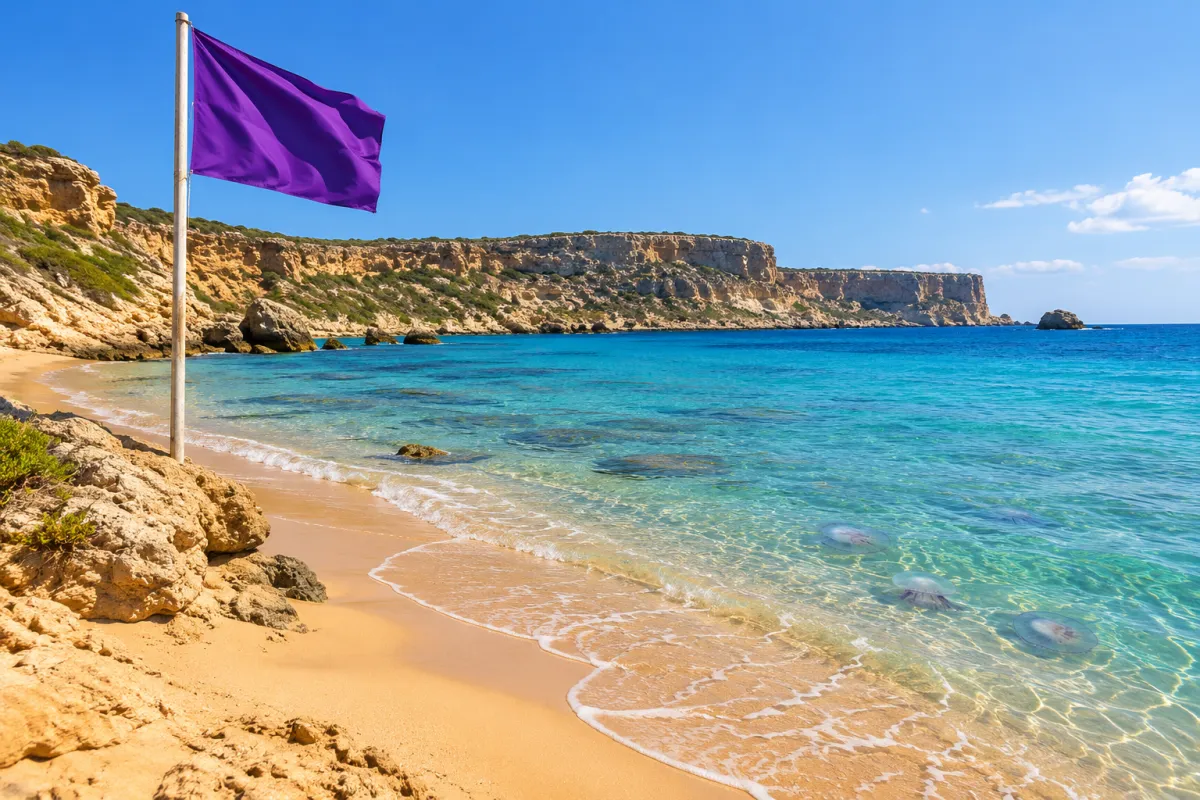
A purple flag on a Maltese sandy beach does not mean the beach is closed. A double red flag does. That one distinction sits behind most of the confusion around a malta beaches closed jellyfish warning. Someone sees a flag, a few jellyfish wash up on the sand, the group chat fills with screenshots, and everyone assumes the whole bay is off limits. Sometimes it is. Often it is not. Knowing the difference decides whether you pack up, move bays, or swim with your eyes open.
This explainer covers what the official flags mean, who tracks jellyfish around the islands, where the warning system does not reach, and what to do with your day if the water at your chosen spot is a no. We have stuck to what the official sources say and linked them in each section, so you can check them yourself.
One honest caveat: jellyfish move with wind and currents, so no article can tell you which bay will be clear on a given afternoon. What we can give you is a quick way to read the signals once you arrive, and a plan B that doesn’t involve sulking on a towel.
Malta beaches closed jellyfish warning: what it actually is
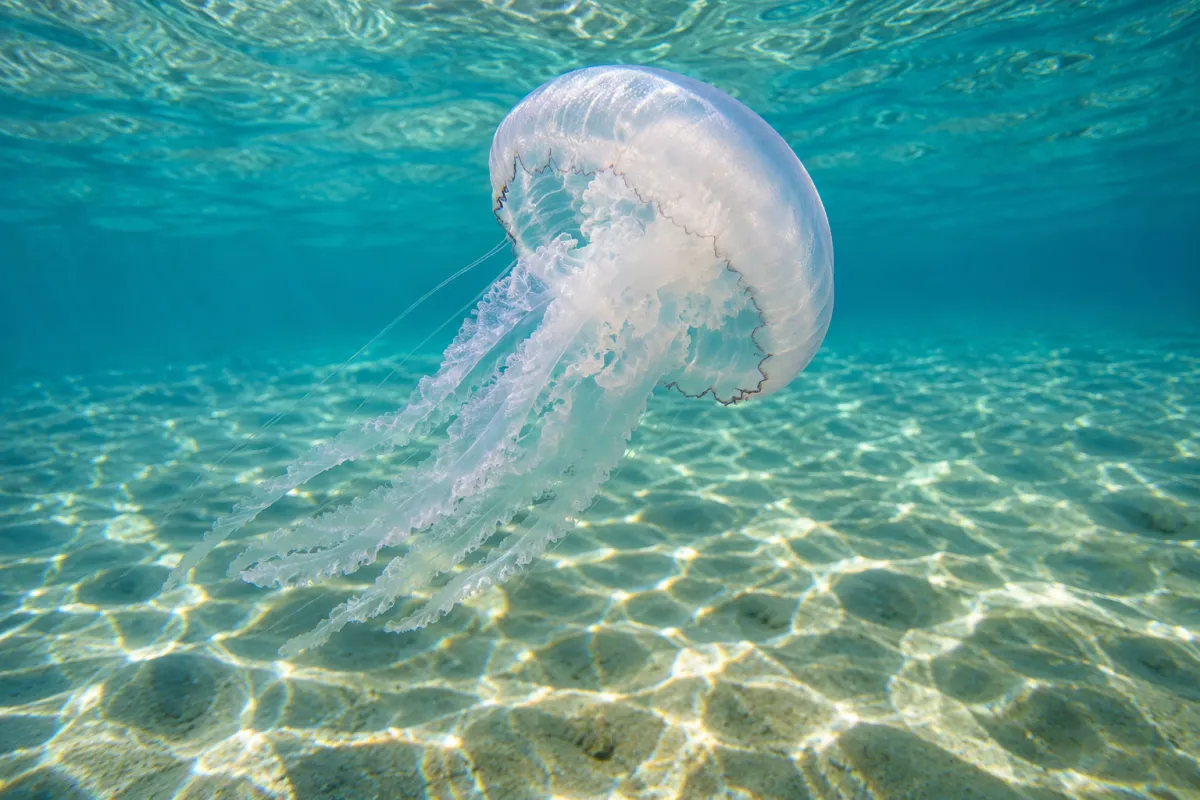
On the beach itself, the warning you will actually meet is a flag. Managed sandy beaches in Malta use coloured flags to tell swimmers what is happening in the water, and one of those flags is specifically about marine life. According to the beach safety guidance published by the Malta Tourism Authority, the purple flag indicates the presence of marine pests or dangerous aquatic life, such as stinging jellyfish, and it is often flown alongside another hazard flag.
That last detail matters. If you see purple on its own, the message is “there are stingers about, take care”. If you see purple next to another warning flag, the lifeguards are telling you two things at once, and you should read both. A jellyfish bloom on a calm day is a very different situation from jellyfish plus rough water.
A closure is a separate signal. The water is only strictly closed to the public when the double red flag goes up. That is the flag that turns a warning into a no-go, and it is usually linked to the sea state rather than to jellyfish alone.
So when a friend messages “the beach is closed because of jellyfish”, the useful follow-up question is: which flag is flying? Purple means caution. Double red means out of the water, full stop.
Purple flag vs double red flag
Here is the short version to screenshot before you head out. Both definitions come from the Malta Tourism Authority beach safety guidance.
| Flag | What it means | What to do |
|---|---|---|
| Purple flag | Marine pests or dangerous aquatic life, such as stinging jellyfish, are present. Often flown alongside another hazard flag. | Look at the water before you go in, check for a second flag, ask the lifeguard where it is clearer, or move to another bay. |
| Double red flag | Water is strictly closed to the public. Conditions such as severe storms, massive swells or heavy undertows are dangerous even for lifeguards entering the water for rescues. | Stay out of the water completely. Enjoy the beach from the sand, or switch plans. |
Definitions checked against official sources in 2026. Flags can change during the day as conditions shift, so look again if you have been on the sand for a few hours.
Other flags exist on lifeguarded beaches too. If you are unsure what a particular colour or combination means, the quickest answer is the lifeguard station. They would much rather explain a flag than pull someone out of the water.
Who the warning system covers, and who it doesn’t
This is the part many visitors and newer arrivals miss. The flag system is not a coastline-wide alert. According to Malta Red Cross guidance, flags only apply to managed sandy beaches during lifeguard operating hours, which are typically seasonal, running from late spring through to mid-autumn.
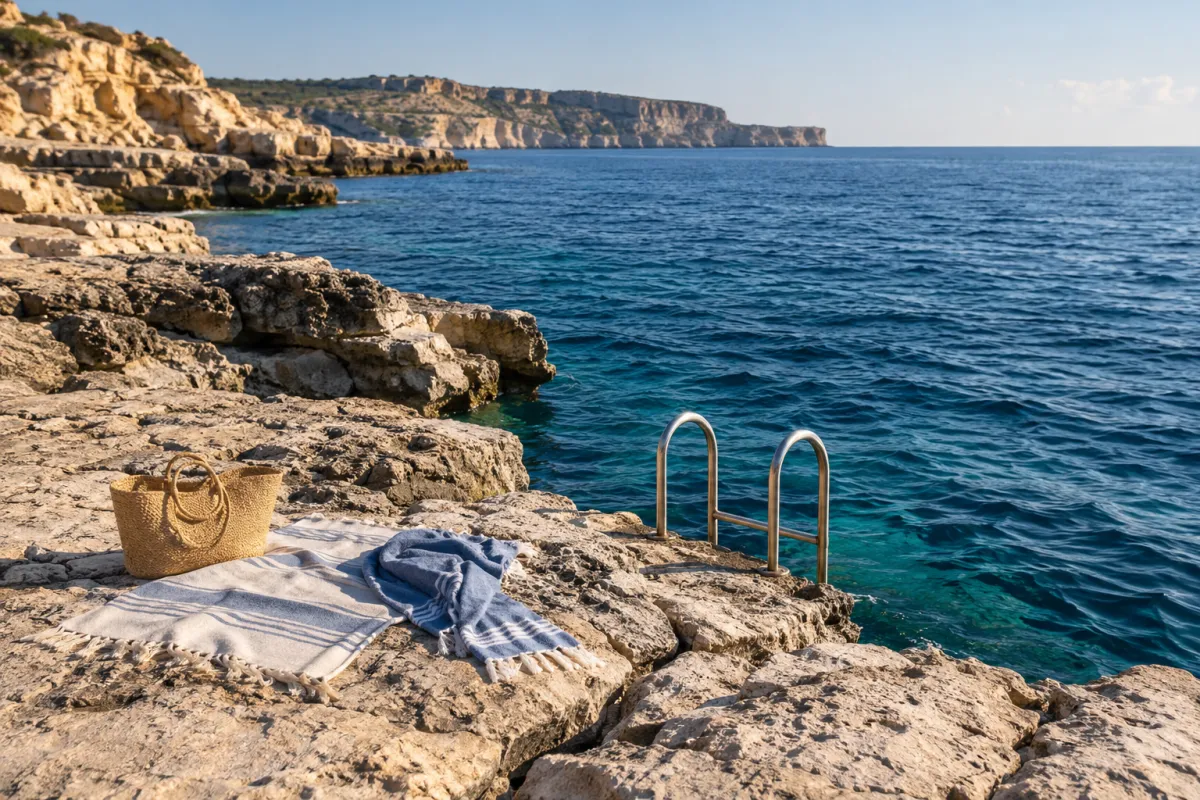
That leaves a big gap, because so much of Malta’s swimming happens off rocks. The same Red Cross guidance points out that much of the coastline consists of rocky swimming spots with no lifeguards present. Think of the ladders off the Sliema promenade, the flat rocks people use around the coast, and popular spots such as St Peter’s Pool. Nobody is going to raise a purple flag there on your behalf.
Who should pay most attention
- Rock swimmers. No lifeguard, no flag, no one to ask. You are your own early-warning system.
- Early and late swimmers. Outside lifeguard hours, an empty flagpole tells you nothing about the water.
- Off-season swimmers. Once the lifeguard season winds down, the managed beaches behave much more like unmanaged ones.
- Visitors and students new to Malta. Flag colours are not universal, and the purple flag in particular catches people out.
- Groups with mixed swimming confidence. A sting that a strong swimmer shrugs off can rattle someone who is already nervous in deep water.
The practical takeaway: a beach with no flag is not a beach with no jellyfish. It may simply be a beach with no lifeguard.
Checking and reporting sightings
For anything beyond the flag in front of you, Malta has a long-running citizen science effort called Spot the Jellyfish. It is coordinated by the Oceanography Malta Research Group at the University of Malta, in collaboration with the International Ocean Institute, and supported by the Malta Tourism Authority and the Environment and Resources Authority.
The idea is simple. Beachgoers, divers and locals report what they see, and those reports feed the tracking that helps swimmers avoid stinging jellyfish. According to the University of Malta, a useful report notes the species, date, time and location of the sighting.
How to make your report useful
- Location first. Name the bay or stretch of rocks as precisely as you can, not just “north of Malta”.
- A clear photo. Shoot from above the water, without touching anything, so the species can be identified.
- Date and time. Blooms can arrive and leave within hours, so the timing is half the value.
- Rough numbers. “One or two” and “the shoreline is full of them” are very different reports.
Before you set off, it is worth checking recent sightings for the area you are heading to. It won’t guarantee clear water, but it can save you a bus ride to a bay that has been full of stingers since morning.
If someone gets stung or gets into trouble
Most stings are painful and annoying rather than dangerous, but you should never assume. Keep it simple:
- Get out of the water calmly. Thrashing about in a bloom tends to cause more contact, not less.
- Tell the lifeguard if there is one. They deal with stings all season and know what to do on that beach.
- Watch for anything beyond local pain. Trouble breathing, swelling spreading away from the sting, dizziness or feeling faint are reasons to get help fast.
- Call for help in an emergency. For any coastal or drowning emergency, call 112 immediately, as Malta Red Cross advises.
If you are swimming off rocks with friends, agree before you get in who keeps an eye on whom, and know roughly where the nearest road access is. It sounds over-cautious until the day you need it.
What to do instead when your bay is a no
A purple flag or a double red flag does not have to wreck the day. A few honest options, with their downsides:
Try another bay
Jellyfish blooms and rough seas depend on wind and currents, so a bay facing a different direction can be noticeably calmer and clearer. The catch: in peak summer, the alternative sandy beaches fill up fast, parking is a battle and buses can be slow and packed. If you are switching, switch early.
Check the weather picture first
A double red flag is usually about the sea, so it often comes with a broader weather story. Our explainer on what each Malta weather warning level means helps you work out whether the whole coast is affected or just one stretch. On scorching days, our piece on Malta heat warnings and the July record is a useful reminder that sitting on hot sand with no swim is not much fun either.
Head to Gozo
If the Malta side is a write-off, a Gozo day can work, especially if you were going to spend hours at the beach anyway. Our guide to the Gozo fast ferry and the new Sliema–Buġibba route covers how to get across. Just check conditions on the Gozo side too, because rough seas do not respect the channel.
Swap the swim for something on land
A coastal walk, a long lunch or a lido-free afternoon in town can rescue the day. Our list of free things to do in Malta has plenty of options that cost nothing, and if you want to sit somewhere with shade and a view, our roundup of new restaurants opening in Malta, from St George’s Bay and beyond gives you somewhere fresh to try.
Other going-out news we track
Jellyfish warnings are one of several changes that quietly reshape a weekend in Malta. A few related things readers search for, and how we handle them:
- Malta restaurants closed down. Venue closures spread fast on social media, often before anything is confirmed. We only report an opening or closure when there is a primary source, such as an operator announcement or a national news report with a date. If you cannot find one, treat the rumour as a rumour.
- Ryanair new routes Malta. New flight routes change who visits and when, especially in shoulder season. For confirmed changes, see our explainer on Malta Airport’s new routes and winter schedule, and always confirm details with the airline itself before booking.
- Malta smoking ban terraces. Rules on smoking on terraces and outdoor seating come up regularly in conversation. We cover changes only when there is an official, dated source behind them, rather than repeating what someone heard at the next table.
The same principle applies to beach warnings: check the source, check the date, then decide.
Turning a changed beach day into a plan
Some of the best days out in Malta start as a cancelled plan. The beach is a no, so someone suggests lunch in Marsaxlokk, a walk along the cliffs, or a game of padel, and suddenly you are meeting people you would never have met on your usual towel spot.
If you are meeting someone new, the usual sense applies whatever the plan. Pick a public place, tell a friend where you are going and who with, sort out your own way home rather than relying on a lift from someone you have just met, and leave if anything feels off. That goes double for rocky swimming spots, which are often quiet and far from help.
Want to turn this into an actual plan? MeetNow is a free app for meeting people in person: a host posts a plan at a public place, says who pays (host pays, split, pay your own or free) and picks who joins. It is live on the web and works in your browser, starting in Malta. The Android app is on Google Play; the iPhone app is not in the App Store yet. Open MeetNow and see the plans posted in Malta.
FAQ
Does a jellyfish warning mean the beach is closed in Malta?
No. A purple flag warns that stinging jellyfish or other marine pests are present and is often flown alongside another hazard flag. The water is only strictly closed to the public when a double red flag is flying, according to the Malta Tourism Authority.
Where can I check or report jellyfish sightings in Malta?
Use Spot the Jellyfish, the citizen science campaign coordinated by the Oceanography Malta Research Group at the University of Malta with the International Ocean Institute, supported by the Malta Tourism Authority and the Environment and Resources Authority. When reporting, note the species, date, time and location.
Are rocky swimming spots covered by the flag system?
No. The flag system only applies to managed sandy beaches during lifeguard operating hours, which are typically seasonal from late spring to mid-autumn. Much of the coastline is rocky with no lifeguards, so you need to check the water yourself.
What number should I call for a beach emergency in Malta?
Call 112, the national emergency number, for any coastal or drowning emergency or a severe reaction to a sting. If a lifeguard is on duty, alert them as well.