Short answer: weather warnings in Malta are issued by the Malta Meteorological Office, which is run by Malta International Airport in Luqa, and published on maltametoffice.com. They use three colours: yellow, orange (sometimes called amber) and red, getting more serious as the colour gets stronger. The Civil Protection Department adds practical advice. In practice, yellow means be aware and plan ahead, orange means dangerous weather and a reason to change your plans, and red means stay indoors and away from the coast. Below: what each level means for your plans, what usually gets cancelled, and where to check.
Autumn is when Malta’s warnings start again. After a long dry summer, the first storms of the season usually arrive between October and December, and they can be sudden: heavy thundery showers, hail, strong winds and rough seas, sometimes all in one afternoon. Most warnings are yellow and pass in a few hours. But Storm Harry in January 2026 showed how serious a red warning can be, so it’s worth knowing what each colour means before you plan a weekend.
Who issues weather warnings in Malta
The Malta Meteorological Office is part of Malta International Airport. It forecasts for the islands and issues the official weather warnings. In December 2025 the airport relaunched the Met Office website at maltametoffice.com, with a three-day forecast split into morning, afternoon and evening, clearer weather icons, and data from more weather stations across the islands, collected with the agriculture ministry’s Research and Advisory Services Directorate. The site also has current conditions, radar images, a seven-day forecast and a mariners’ forecast.
The Civil Protection Department (CPD) responds to emergencies such as fallen trees and floods, and often issues its own advice when a warning is in force: secure loose objects on balconies and roofs, stay away from shorelines and breakwaters, avoid roads known to flood, and drive carefully.
Malta is also on MeteoAlarm, the European warnings site that brings together national weather services and uses the same yellow, orange and red colours across Europe.
What yellow, orange and red warnings mean
Each warning is for a specific type of weather, such as wind, rain and thunderstorms, hail or heat, and for a specific period. MeteoAlarm describes the three levels in general terms: potentially dangerous, dangerous with unusual weather forecast, and very dangerous with exceptionally intense weather forecast. Here’s what that means in practice for plans in Malta.
| Level | What it means | Typical Malta examples | What to do with plans |
|---|---|---|---|
| Yellow | Potentially dangerous weather. Be aware, plan ahead, expect possible delays. | Thundery showers, strong gusts, possible hail, very hot days | Keep the plan, but have an indoor backup and check the forecast before you leave |
| Orange (amber) | Dangerous weather; unusual conditions forecast. Damage and disruption are possible. | Gale-force winds over exposed areas, heavy thunderstorms with hail, flooding | Move outdoor plans indoors or postpone; avoid the coast and flood-prone roads |
| Red | Very dangerous weather; exceptionally intense conditions forecast. | Severe gales (as in Storm Harry, January 2026), extreme heat | Postpone. Stay indoors and follow Civil Protection advice |
Sources: Malta Meteorological Office; MeteoAlarm’s level descriptions; Civil Protection advice as reported with past warnings. Checked October 2026. Exact thresholds for each level are set nationally, so always read the text of the warning itself, not just the colour. Heat warnings work the same way; our Malta heatwave guide covers the summer side.

What a red warning looked like: Storm Harry, January 2026
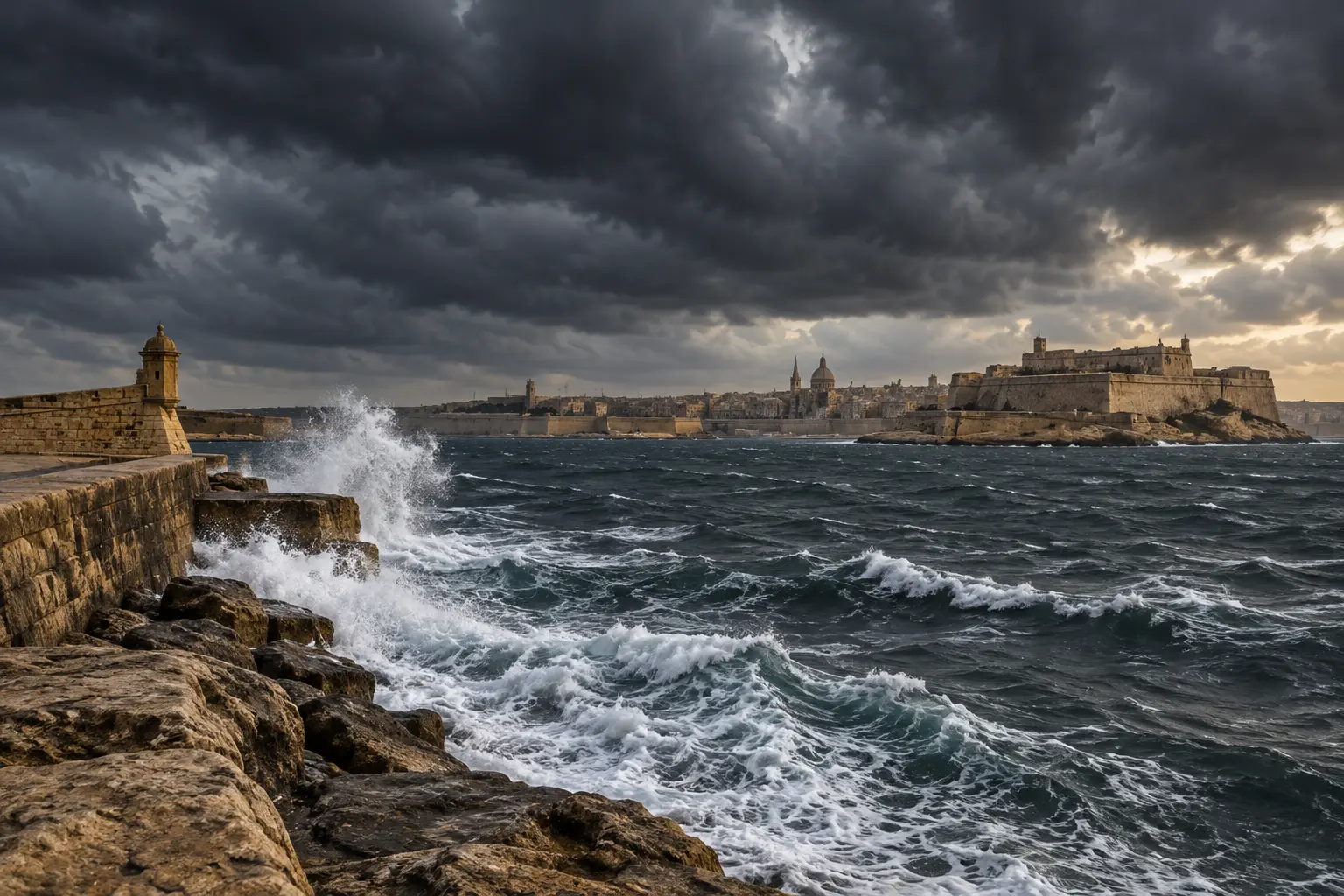
On 19 January 2026, the Met Office issued a red warning for severe gale-force winds as Storm Harry hit the central Mediterranean, and it stayed in force into the next day before being downgraded to orange. The government and Civil Protection told people to stay indoors and away from the coast. Ferry services were suspended, including Gozo Channel, schools in Mellieħa, St Paul’s Bay and Qawra closed, and the CPD dealt with dozens of fallen trees and flooding, with Marsaskala among the worst hit. It’s a useful reminder that a red warning isn’t a “maybe”: everything outdoors stops.
What usually gets cancelled
- Ferries. Rough seas can suspend the Gozo Channel crossing and the Valletta harbour ferries to Sliema and the Three Cities. If your evening depends on the ferry, have a bus route ready. If you’re planning a trip across, our Gozo day trip itinerary covers the ferries.
- Outdoor events. Open-air concerts, festas, markets and sports events are often postponed or moved. Check the organiser’s page on the day.
- Coastal walks and swims. Cliff paths are slippery and dangerous in wind and rain. Postpone any coastal walk, including group walks with the Ramblers Association of Malta, when there’s an orange or red wind warning.
- Buses and roads. Buses usually keep running, but flooded roads cause diversions and delays. Some low-lying roads flood almost every big storm. Check our roadworks and bus detours guide and service alerts in the tallinja app.
- Flights. Strong winds can delay or divert flights at Malta International Airport. Check your flight status before you leave for the airport.
What to do with your plans
Most warnings are yellow and short, so you rarely need to cancel. The best approach is to decide in advance:
- When you invite people, name the backup. “Walk at Dingli, or bowling if it rains” means nobody has to cancel.
- Check the Met Office before you leave, not just the morning forecast. Thunderstorms in Malta build fast.
- Move outdoors to indoors for orange. A board game cafe or a pub quiz night makes an easy indoor swap.
- Postpone for red. Message the group early with a new date, rather than waiting to see.
- Plan the way home. If the ferry stops or roads flood, how will everyone get back? Agree it before the weather turns.

Where to check warnings
- Malta Meteorological Office: maltametoffice.com, for forecasts, radar and official warnings.
- Civil Protection Department: its official channels for safety advice during a warning.
- MeteoAlarm: the Malta page on meteoalarm.org shows warnings in the European format.
- Transport operators: the tallinja app for buses, and the ferry operators’ own notices.
This guide explains the system; it doesn’t track live warnings. Always check the Met Office for what’s in force when you’re planning.
Frequently asked questions
Who issues weather warnings in Malta?
The Malta Meteorological Office, which is part of Malta International Airport in Luqa. Its warnings and forecasts are on maltametoffice.com, and the Civil Protection Department adds safety advice.
What does a yellow weather warning mean in Malta?
Potentially dangerous weather, such as thundery showers, strong gusts or possible hail. Be aware, plan ahead and expect possible delays. Most plans can go ahead with an indoor backup.
What does an orange weather warning mean?
Dangerous weather, such as gale-force winds over exposed areas or heavy thunderstorms. Damage and disruption are possible, so move outdoor plans indoors or postpone, and stay away from the coast.
What happened during the red warning for Storm Harry?
On 19 January 2026, the Met Office issued a red warning for severe gale-force winds. Ferries were suspended, some schools closed, and Civil Protection dealt with fallen trees and flooding before the warning was downgraded to orange.
Do ferries run during a weather warning?
Often not in strong wind warnings. Rough seas can suspend the Gozo Channel crossing and the Valletta harbour ferries. Check the operator’s notices and have a bus route as a backup.
Make it a plan
A warning doesn’t have to cancel the plan, only change it. Pick an indoor backup when you invite people, and the weather becomes a detail.
Want to turn this into an actual plan? MeetNow is a free app for meeting people in person: a host posts a plan at a public place, says who pays (host pays, split, pay your own or free) and picks who joins. It is live in Malta now on the web, with the iPhone and Android apps coming to the App Store and Google Play soon: open MeetNow and see this week’s plans in Valletta, Sliema and St Julian’s.
We may mention products we’re connected to, including MeetNow.