The best things to do in Malta at Easter happen over four days, mostly in the street and mostly for free. There is a candlelit climb outside Siġġiewi on Maundy Thursday, solemn Good Friday processions in towns like Ħaż-Żebbuġ and Qormi, and a heavy statue of the Risen Christ being run through the streets of Birgu on Easter Sunday morning. If you only know Malta from August beach days and festa fireworks, Holy Week will feel like a different island.
Easter 2027 comes early, at the very end of March. That means mild days, green countryside, cool evenings and a sea most people will admire rather than swim in. It also sits close to two other public holidays that month, so it is a good stretch to plan around whether you live here, study here or are flying in for a few days.
Below you will find a dated calendar for Holy Week and the weeks around it, what each tradition actually looks like on the ground, the honest downsides (closed roads, packed buses, narrow streets with nowhere to stand) and a few other seasonal events worth noting while you plan the rest of the year.
Things to do in Malta at Easter 2027: the dated calendar
Easter Sunday 2027 falls on 28 March, and Good Friday on 26 March is a national public holiday, as listed in our full list of Malta public holidays and long weekends for 2027. Easter Monday is a normal working day in Malta, which surprises a lot of visitors from elsewhere in Europe, so the Easter break here is really Thursday evening to Sunday.
The table below covers the main dates. Parish and band club times for 2027 have not been announced yet: each parish sets its own procession route and start time, usually publishing them in the weeks before Holy Week, so treat the timing column as the usual pattern and confirm locally.
| Date | Place | What | Cost | Getting there |
|---|---|---|---|---|
| Friday 19 March 2027 | Nationwide | St Joseph’s Day public holiday: a long weekend just before Holy Week | Free | Good weekend for a Gozo trip or countryside walks before Easter crowds |
| Sunday 21 March 2027 | Parish churches across Malta and Gozo | Palm Sunday: the start of Holy Week | Free | Walk or bus to your nearest parish church |
| Thursday 25 March 2027, evening into the night | Valletta; Mdina and Rabat | Seven Churches Visitation and the Altars of Repose | Free | Bus to Valletta or Rabat, then walk between churches |
| Thursday 25 March 2027, evening | Girgenti Hill, outside Siġġiewi | Candlelit pilgrimage to the Laferla Cross | Free | Bus to Siġġiewi and walk; parking near the hill is very limited |
| Friday 26 March 2027 | Ħaż-Żebbuġ, Qormi, Valletta, Birgu and many other towns | Good Friday processions with life-sized statues, biblical costumes and band marches | Free to watch | Bus or walk; expect road closures and diversions in the town centre |
| Sunday 28 March 2027, morning | Birgu and other towns | Easter Sunday Risen Christ run | Free | Bus to Birgu, or the harbour ferry from Valletta if it is running holiday hours |
| Wednesday 31 March 2027 | Nationwide | Freedom Day public holiday, a midweek break after Easter | Free | Quiet day for a coastal walk or a long lunch |
| All of Lent and Holy Week | Bakeries and confectioners island-wide | Figolli, the traditional Easter pastry | Varies by size and shop | Your local bakery; order big ones in advance |
Last checked November 2026. Holiday dates follow the official public holiday calendar; individual procession routes and start times for 2027 are not yet published and will be set by each parish closer to the date.
February 2027: Carnival, then Lent
Easter in Malta does not start in Holy Week. It starts the morning after Carnival ends, when the colour and noise of the floats in Valletta and the unofficial, much rougher party in Nadur give way to Lent. If you want the full contrast, go to Carnival first: our Malta Carnival 2027 guide with Valletta tickets and the Nadur scene covers dates, grandstands and the late ferry problem from Gozo.
Lent itself is low-key for visitors. You will notice it in small ways: some parishes hold talks and evening services, a few families cut back on going out, and bakeries start showing figolli in the window weeks before Easter. It is a quieter time on the social calendar, which honestly makes it a good period for the cheaper, simpler plans in our list of free things to do in Malta: coastal walks, sunsets and long coffees before the spring crowds arrive.
March 2027: Holy Week, day by day
March 2027 is the main event month. Here is how the week unfolds and what is actually worth your time.
The St Joseph long weekend (19–21 March)
St Joseph’s Day lands on a Friday in 2027, which hands you a three-day weekend that runs straight into Palm Sunday. If you want to go to Gozo, do it this weekend rather than over Easter itself, when ferries and Gozo accommodation fill with families heading home for the holidays. The countryside is at its greenest in March, so this is a strong weekend for a hike before the Holy Week schedule takes over.
Palm Sunday (21 March)
Palm Sunday opens Holy Week in parish churches across both islands. For most visitors it is not a destination day in itself, but it is a good moment to check parish noticeboards and band club pages for the week’s procession times. If you live in a village, ask the people around you: the band club or the local bar will know exactly when the statues come out.
Maundy Thursday: the Seven Churches Visitation (25 March)
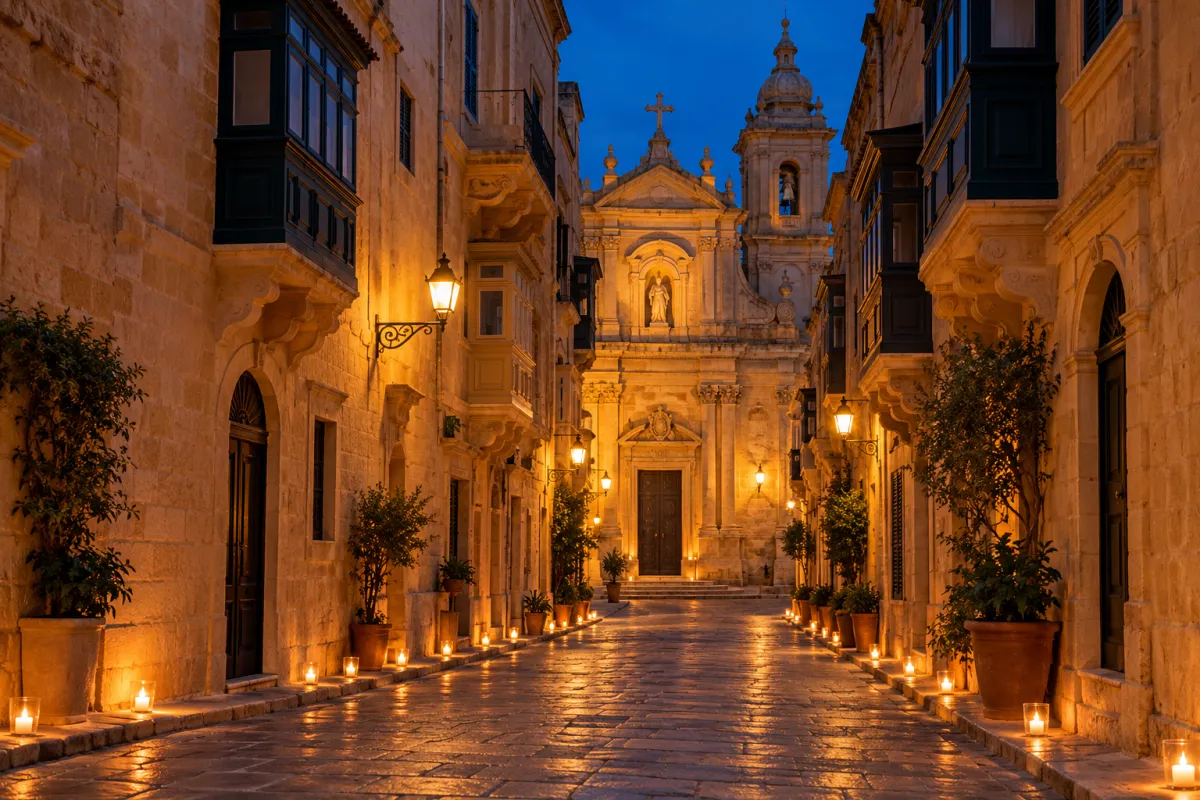
On Maundy Thursday evening, people walk between churches to see the Altars of Repose, a tradition known as the Seven Churches Visitation or Visita tal-Visti (St Hotels Malta). The altars are dressed with flowers and candles, churches stay open late, and the streets are full of families, groups of friends and students doing the circuit together.
Valletta is the easiest place to do it because the churches are close together and the city is walkable. Mdina and Rabat work well too, with the bonus of quieter streets once you leave the main squares. Wear comfortable shoes, dress respectfully (shoulders covered is the safe default inside churches) and keep your voice down inside. If you need a break between churches, our guide to the best cafés in Valletta for sitting and lingering has places to warm up, though check opening hours that evening because some close early.
Maundy Thursday: the candlelit walk to the Laferla Cross
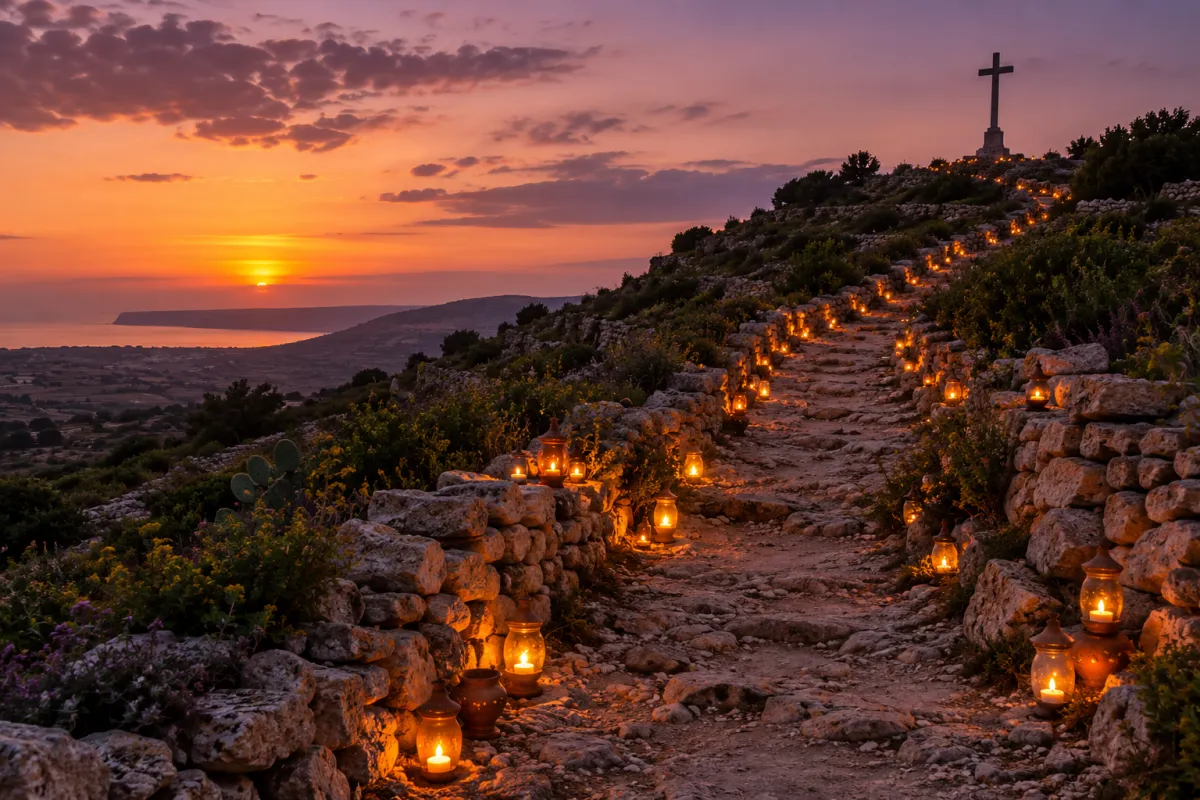
The most striking thing to do on Maundy Thursday is outside Siġġiewi, where pilgrims walk up Girgenti Hill to the Laferla Cross (Salib tal-Għolja) along a path lit by thousands of candles and oil lamps (The Waterfront Hotel). It draws people of every age, including a lot of young people, and the atmosphere is quiet and reflective rather than festive.
Honest downsides: the path is busy and partly uneven, it gets dark and chilly on the hill, and parking anywhere near it is a headache. Take a bus to Siġġiewi or get dropped off, bring a light layer and a torch for the walk back, and agree on a meeting point with your group in case you get separated in the crowd.
Good Friday processions (26 March)
Good Friday is the centrepiece. Across Malta and Gozo, towns hold processions in which life-sized statues depicting the Passion of Christ are carried through the streets by local volunteers, some walking barefoot or in traditional biblical costumes (Corinthia). Band clubs play funeral marches, and you will see participants dressed as Roman soldiers and figures from the Bible walking between the statues.
The towns best known for major processions include Ħaż-Żebbuġ, Qormi, Valletta and Birgu. Each one has its own character: the bigger towns feel like a slow-moving, hours-long pageant, while smaller villages are more intimate and easier to watch without a crush. Processions move slowly, so you do not need to arrive at the start; pick a spot along the route, ideally on a wider street where you can step back, and let it come to you.
Holy Saturday (27 March)
Saturday is the quiet pause between Good Friday and Easter Sunday. It is a sensible day to rest, buy figolli if you have not already, book or confirm Easter lunch and work out how you will reach Birgu early the next morning.
Easter Sunday: the Risen Christ run (28 March)
The mood flips completely on Easter Sunday morning. In towns such as Birgu, statue-bearers carry the heavy statue of the Risen Christ through the streets, often running with it at high speed amid cheering crowds to symbolise triumph over death (inlingua Malta). It is loud, joyful and over quickly, so arrive early and stand somewhere with a clear view of the stretch where the bearers pick up speed. Locals will point you to the best corner if you ask.
After the run, most people head off to a long family lunch, which means restaurants are busy and often fully booked. If you are not with family, plan ahead: book a table, or turn it into a picnic or a walk along the Three Cities waterfront.
Figolli and Easter food
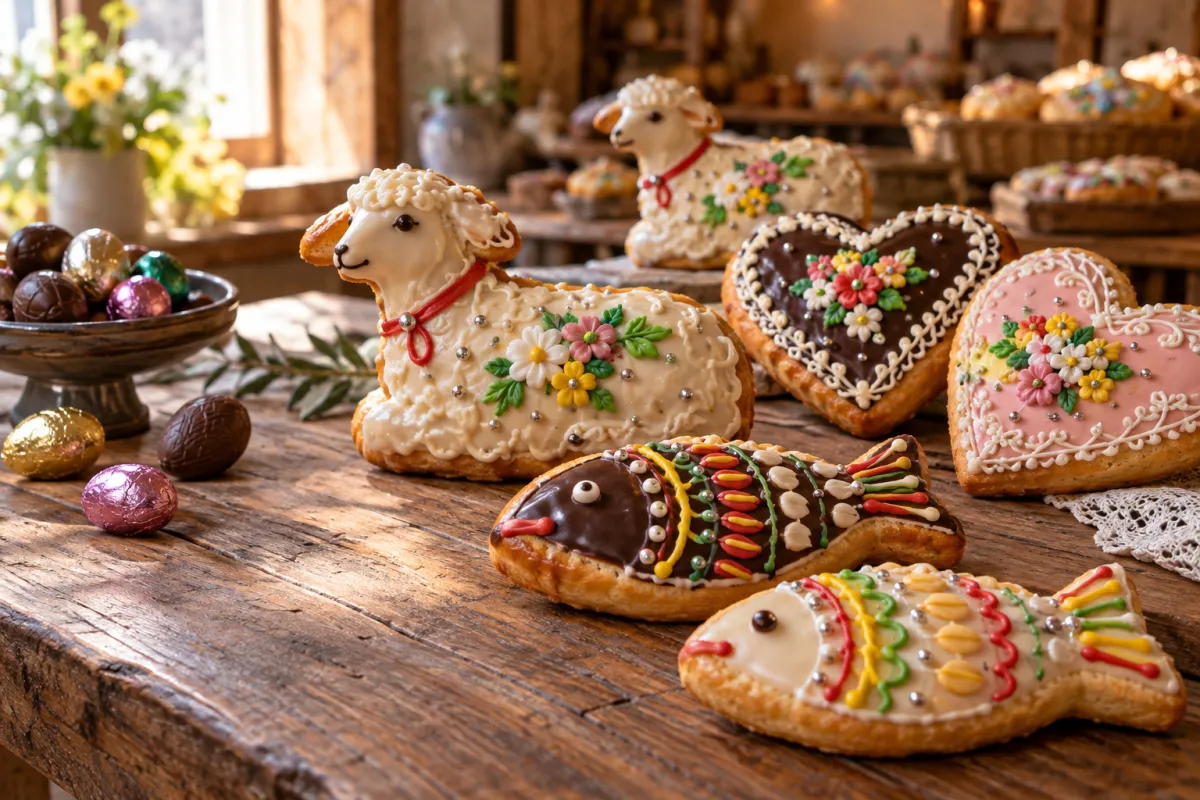
The one food you have to try is the figolla. It is a traditional Maltese Easter pastry made of sweet shortcrust filled with a moist almond mixture similar to marzipan, cut into shapes like lambs, hearts or fish and decorated with colourful icing (Corinthia). You will also see versions finished with chocolate, and plenty of bakeries make small ones that are easy to share.
Buy them from a local bakery or confectioner rather than a supermarket if you can: the homemade ones are usually better and more generously filled. Large or decorated figolli for a family gathering are worth ordering a few days ahead, because the best bakeries sell out in the final days before Easter. If you are invited to someone’s home for Easter lunch, bringing figolli or chocolate eggs is a very safe gift.
April 2027: after Easter and the start of festa season
Because Easter is so early in 2027, the Freedom Day holiday on Wednesday 31 March gives you one more breather before April. After that, April is one of the best months to be out and about in Malta: warm enough for long walks and outdoor lunches, not yet hot, and much less crowded than summer.
Village festa season usually opens in late April and runs into early October, so April is when band clubs start rehearsing and streets begin to get their decorations. Our Malta festa calendar with village feasts month by month tracks the dates as parishes announce them. For the wider picture, from spring concerts to summer festivals, use the Malta events calendar for the year.
- Countryside walks: the fields are still green and wildflowers are out; the cliffs and valleys are far more comfortable to hike now than in July.
- First swims: braver people start swimming in April, but the water is still cool; bring a towel and a jumper.
- Outdoor coffees and lunches: terraces fill up on sunny weekends, so meet earlier in the day if you want a good table.
Practical tips: crowds, buses, closures and weather
Easter is lovely, but it is not effortless. Here is what tends to go wrong and how to avoid it.
Roads and parking
Procession routes close town centres for hours, and the streets in places like Qormi, Ħaż-Żebbuġ and Birgu are narrow. Driving in at the last minute is the classic mistake: you will spend longer looking for parking than watching the procession. Park on the edge of town and walk in, or skip the car altogether.
Buses
Buses run on public holidays, but they get crowded around big processions and are often diverted around closed streets. Allow extra time, check Malta Public Transport’s journey planner on the day, and accept that the return trip after a Good Friday procession can be slow when everyone leaves at once. Sharing a cab with friends is a reasonable backup for getting home.
Opening hours
Good Friday is the day most likely to catch you out, with some shops and businesses closed or on reduced hours. Easter Sunday is busy for restaurants but quieter for shops. Easter Monday is a normal working day, so if you are visiting, do not plan your shopping around it being closed.
Weather
Late March in Malta is usually mild in the day and cool in the evening, with the odd windy or rainy spell. For Maundy Thursday and Good Friday evenings, bring a layer; for the Laferla Cross walk, bring shoes you do not mind getting dusty.
Going with new people at Easter
Holy Week is a surprisingly good time to do something with people you do not know well yet. A Seven Churches walk in Valletta, a Good Friday procession in a village you have never visited or an early Easter Sunday trip to Birgu are all easy, low-pressure plans with something to talk about built in. They are also free, which takes the awkwardness out of who pays.
If you are meeting someone new, keep it simple and safe: pick a public meeting point (a church square or a café near the start of the route), tell a friend where you are going, sort out your own way home rather than relying on someone else’s car, and leave if anything feels off. Crowds at processions can be dense, so agree on a fallback meeting spot if you get separated. If you are already thinking about spring dates, our date ideas in Malta with costs include plenty that work around Easter.
Beyond Easter: Mnarja, Birgufest and Halloween events in Malta
If Easter has given you a taste for Malta’s traditional calendar, three other moments in the year are worth pencilling in.
Mnarja festival, Buskett
The Mnarja festival at Buskett is tied to the feast of Saints Peter and Paul at the end of June, and it is one of the oldest folk celebrations on the island. Think woodland, traditional folk singing, agricultural shows and rabbit stew, with a more rustic feel than a village festa. The official programme is usually announced closer to summer, so check before you go, and expect heat and limited shade in the afternoon.
Birgufest
Birgufest takes over Birgu in the autumn, with the old streets lit by candlelight and a programme of cultural events around them. If you liked the Easter Sunday run, coming back to Birgu for Birgufest shows you the same streets in a completely different mood. Dates for each edition are confirmed by the organisers nearer the time, so treat autumn as the usual window until they are announced.
Halloween events in Malta
Halloween events in Malta have grown over the years, from themed parties and costume nights to family-friendly activities, mostly in the last week of October. They sit close to Notte Bianca and the start of autumn programming, so October is a busy month. For the full run of autumn dates, see the year calendar linked above.
Want to turn this into an actual plan? MeetNow is a free app for meeting people in person: a host posts a plan at a public place, says who pays (host pays, split, pay your own or free) and picks who joins. It is live on the web and works in your browser, starting in Malta. The Android app is on Google Play; the iPhone app is not in the App Store yet. Open MeetNow and see the plans posted in Malta.
FAQ
When is Easter in Malta in 2027?
Easter Sunday falls on 28 March 2027. Maundy Thursday is 25 March and Good Friday, a national public holiday, is 26 March. Parish procession times for 2027 are announced closer to Holy Week.
Is Easter Monday a public holiday in Malta?
No. Easter Monday is a normal working day in Malta. The public holiday is Good Friday, and in 2027 St Joseph’s Day on 19 March and Freedom Day on 31 March also fall close to Easter.
Are the Good Friday processions free to watch?
Yes. The processions take place in public streets and anyone can watch. Arrive early, stand on a wider part of the route and treat it as a religious event: no loud music, no cutting through and no flash close to participants.
What is the Seven Churches Visitation?
It is a Maundy Thursday tradition, also called Visita tal-Visti, where people walk between churches to see the Altars of Repose decorated with flowers and candles. Valletta and Mdina with Rabat are the easiest places to do it on foot.
Where can I see the Risen Christ run on Easter Sunday?
Birgu is the best-known place, where statue-bearers run with the heavy statue of the Risen Christ through cheering crowds on Easter Sunday morning. Go early, as it is over quickly, and take the bus or the harbour ferry rather than driving.
What are figolli and where can I buy them?
Figolli are traditional Maltese Easter pastries made of sweet shortcrust filled with an almond mixture similar to marzipan, cut into shapes like lambs, hearts or fish and decorated with icing. Local bakeries and confectioners sell them through Lent; order large ones a few days before Easter.