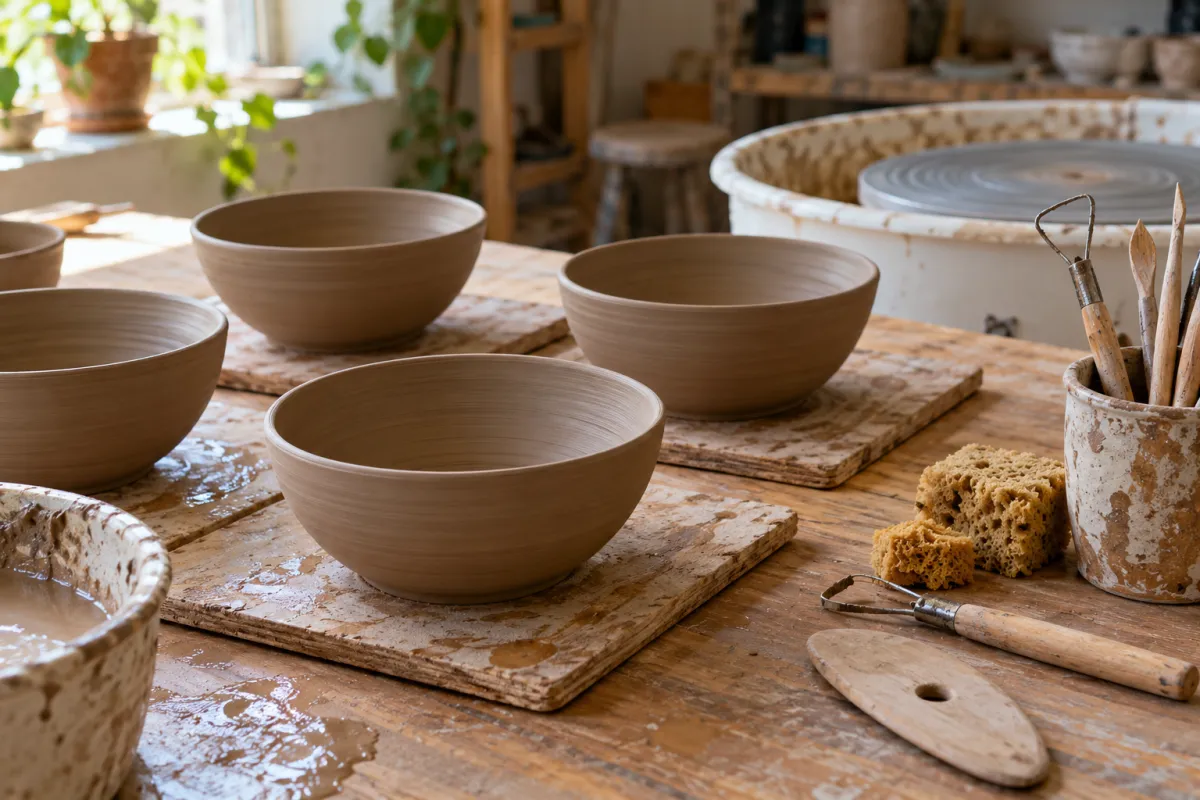
A two-hour pottery workshop is one of the easiest ways to spend an afternoon next to strangers who will, by the end, have watched your bowl collapse and helped you rescue it. If you have been searching for art classes Malta adults can join without a portfolio, a degree or a perfect sketchbook, there are more options than most people realise. These include long-running society courses in Valletta, weekly painting blocks in Marsascala and one-off craft workshops you can book with a friend.
This guide is written for the people who use maltasocial.com: locals who want a new weekly habit, expats looking for a room full of people who are not colleagues, students who need something other than lectures, and visitors staying long enough to commit to a few sessions. Every studio below has its own official website, which we checked before publishing. Prices and schedules change, so treat the table as a starting point and confirm before you pay.
One honest note up front: an art class is not a party. People come to concentrate. But a shared table, shared materials and a shared struggle with perspective break the ice faster than most bars do, and the same faces every week turn into actual friendships.
Why art classes work for meeting people
Most social advice in Malta defaults to drinks. Drinks are fine, but they reward people who are already confident with strangers. A class flips that. You have a reason to be there, something to look at other than each other, and an instant topic of conversation in whatever is happening on the table in front of you.
Art classes also have a structure that helps friendships form. You see the same people at the same time each week, which matters more than anything else. One great conversation at a bar rarely turns into a friendship; six average conversations over six Tuesdays often does. The teacher handles the awkward bit by introducing the group and setting tasks, so nobody has to carry the room.
The mix of people is another plus. A Valletta evening course might put a retired local painter, an Italian iGaming developer and a Maltese university student at the same easel. That is a broader crowd than you will meet in most Sliema bars, and nobody is there to network.
Art classes Malta adults can join: the shortlist
These are the studios and organisations we could verify through their own official websites. We have left out anything we could not confirm, so if your favourite local studio is missing, it is not a judgement on quality.
Malta Society of Arts, Valletta
The Malta Society of Arts is based at Palazzo de La Salle on Republic Street in Valletta, a historic building that feels a world away from the shopping crowds outside. It runs a range of adult courses across fine art and craft, from painting and drawing through to practical skills such as sewing. For example, the Art for Mature Students course is listed at €86 on the Malta Society of Arts website, which is reasonable for a structured course in the capital.
Membership is worth knowing about if you plan to stay. The society offers a significant course discount to members who have paid several years of membership, so long-term residents who take classes regularly can save over time. Check the current terms on the official site before signing up.
Who it suits: people who want a traditional, structured course with a mixed-age group, and anyone who likes the idea of learning in a historic Valletta palazzo. If you want to make an evening of it, pair your class with a stop at one of the spots in our guide to the best cafés in Valletta.
Art Classes Malta
Art Classes Malta runs adult courses and workshops on an academic-style calendar, with intakes starting in October, February and June according to Art Classes Malta. The range covers beginner drawing and watercolour, and goes up to formal MQF-accredited awards for people who want a qualification as well as a hobby.
Formats vary a lot. Some options are short, intensive workshops packed into a weekend or a few sessions; others are modular programmes that run over many weeks. That makes it a good choice whether you want a taster or a proper commitment. The intake structure means everyone starts together, which is helpful socially: nobody is the new person joining an established group halfway through.
Who it suits: beginners who like a clear start date, and anyone who wants a longer course with progression rather than a one-off afternoon.
Art Academy Direct (Art Academy Education)
If you would rather try something without committing to a whole term, Art Academy Direct offers short hobby workshops for adult beginners. Pottery and modern calligraphy workshops are priced at around €30 per person for a two-hour, all-inclusive session on Art Academy Direct. They also run canvas and fabric painting and mosaic sessions, plus more specialised craft workshops.
The specialist sessions cost more because tools and materials are expensive. Leather crafting and silver jewellery workshops are listed at €75 to €80 per person for sessions of three to three and a half hours on the same site. That is more than a dinner out, but you leave with a finished piece and a few hours of side-by-side chat.
Who it suits: people who want to test a medium before investing, couples or friends looking for a different plan, and visitors on a short stay. A pottery or calligraphy session also works well as one of the more original date ideas in Malta, because you have something to do with your hands instead of staring across a table.
PaintMalta: C.S. Lawrence Art Studio, Marsascala, and The Gallery at Galea’s, Valletta
PaintMalta runs adult acrylic painting classes at C.S. Lawrence Art Studio in Marsascala and at The Gallery at Galea’s in Valletta. Classes run all year, not just in terms, and you sign up for blocks of weekly sessions. The price is €90 for a four-week course of two hours a week, with students committing to consecutive four-week blocks, according to PaintMalta.
This block structure is quietly one of the best things for meeting people. Because classes roll on all year, you get regulars who have been coming for months, and they tend to be welcoming to newcomers. The small-studio feel also means the teacher actually knows your name.
Who it suits: people who want a steady weekly habit, south-east residents who are tired of always travelling to Sliema or Valletta for things to do, and anyone who learns better with consistent feedback.
Prices, schedules and how to join at a glance
All details come from each organisation’s official website, last checked May 2026. Always confirm current dates and fees directly before booking.
| Place / activity | Area | When | Cost | How to join |
|---|---|---|---|---|
| Malta Society of Arts: adult art and craft courses | Palazzo de La Salle, Valletta | Course-based; see current listings | Example: Art for Mature Students €86 (artsmalta.org) | Enrol through the society’s official website or office |
| Art Classes Malta: drawing, watercolour, accredited awards | See website for venue | Intakes in October, February and June (artclassesmalta.com) | Varies by course; see website | Register online before each intake |
| Art Academy Direct: pottery, calligraphy, painting, craft workshops | See website for venue | Individual workshop dates | Pottery or calligraphy around €30 for 2 hours; leather or silver jewellery €75 to €80 (artacademydirect.com) | Book a specific workshop online |
| PaintMalta: adult acrylic painting | Marsascala and Valletta | Year-round, 2 hours weekly | €90 per 4-week block (paintmalta.com) | Contact via website and commit to a 4-week block |
Last checked May 2026.
Workshop, block or term course: how to choose
The right format depends less on your artistic ambitions and more on what you want socially.
- One-off workshops are perfect for testing a medium or getting out with a friend. You will chat with people, but you probably will not see them again unless you swap contacts. Go in with a plan to ask, “Are you doing any others?” before you leave.
- Rolling blocks, like the four-week painting courses, are the sweet spot for meeting people. The commitment is short enough to feel low-risk, but regular enough that faces become familiar.
- Term courses with fixed intakes give you a cohort. Everyone starts together, everyone is equally lost in week one, and by the end you have a group. These suit people who are newly arrived and want a dependable weekly anchor.
A practical tip: pick a class that fits your real week, not your ideal week. A course across the island at rush hour will feel romantic in September and exhausting by November. If you live in Sliema or St Julian’s, a Valletta class is easy by ferry or bus; if you live in the south, Marsascala may be far more realistic.
How to actually start a conversation there
Art classes have a built-in social script if you know where to look. Here is what works in practice.
Arrive ten minutes early
The minutes before a class starts are the most social part of the session. People are setting up, borrowing brushes and unsure where to sit. Turn up early, take a seat next to someone rather than at an empty table, and ask the easiest question in the room: “Is this your first time here too?”
Comment on the work, not the person
“How did you get that colour?” or “Your shading is so much better than mine” is a natural opener that nobody will misread. It invites the other person to explain something, which most people enjoy. Keep it genuine: people can tell the difference between interest and flattery.
Use the breaks
Longer sessions usually have a pause for coffee or for paint to dry. This is your window. Step outside, ask someone where they are from or what got them into the class, and you have turned a classmate into an acquaintance.
Suggest something small afterwards
After a couple of sessions, the easiest move is a low-stakes plan right after class: a coffee nearby, a quick bite, or a gallery visit at the weekend. Valletta classes are ideal for this, and our Valletta cultural agenda lists exhibitions you can suggest without it feeling like a big ask.
Start a group chat for the class
Someone has to do it, and people are almost always grateful. Frame it practically, for sharing photos of work or asking about homework, and the friendships follow naturally.
The honest downsides
Art classes are great, but they are not effortless. Here is what to expect.
- Parking and traffic. Valletta parking is limited, and evening traffic towards the capital can be slow. The bus or the ferry from Sliema is often less stressful, but check late return times before you commit to an evening course.
- Summer heat. Not every studio is cool in July and August. If you are doing a summer intake, bring water, wear clothes you can get paint on and ask whether the room is air-conditioned.
- Materials add up. Some courses include materials and some do not. Ask before enrolling, especially for painting and drawing courses where a starter kit can surprise you.
- Courses fill up. Popular intakes and weekend workshops can sell out. If a date matters to you, book early.
- Not everyone wants to chat. Some people come specifically for quiet focus. Read the room, and do not take it personally if your neighbour prefers to paint in silence.
Beyond the easel: other ways to meet people
If art is one part of building a social life, it helps to combine it with something completely different. People who ask us where to meet expats in Malta usually do best with a mix of one creative habit, one active habit and one talky one.
For the active side, cycling groups with weekend rides are a popular choice, especially in the cooler months when early starts are pleasant rather than punishing. Look for groups that publish route, pace and meeting point in advance, and start with a no-drop beginner ride if you have not cycled on Malta’s roads before. If you prefer ball games or walls, our guides to board game cafés in Malta and other indoor plans are good wet-weather alternatives.
For the talky side, a book club in Malta works on the same principle as an art class: a shared object gives everyone something to discuss. Clubs come and go, so look for ones with a recent meeting date and a public venue such as a café. A language exchange in Malta is another excellent option, especially if you are learning Maltese or Italian.
For a broader overview of clubs, groups and activities across the island, see our main guide to places to meet people in Malta.
Meeting new people safely
Classes are about as safe a setting as you will find to meet strangers, but the usual common sense applies once you take a friendship outside the studio.
- Meet in a public place for the first few times, such as a café or gallery.
- Tell a friend where you are going and who with.
- Arrange your own way home rather than relying on a lift from someone you have just met.
- If anything feels off, leave. You do not owe anyone an explanation.
Want to turn this into an actual plan? MeetNow is a free app for meeting people in person: a host posts a plan at a public place, says who pays (host pays, split, pay your own or free) and picks who joins. It is live on the web and works in your browser, starting in Malta. The Android app is on Google Play; the iPhone app is not in the App Store yet. Open MeetNow and see the plans posted in Malta.
FAQ
Do I need any experience to join art classes in Malta as an adult?
No. Most of the studios in this guide offer beginner options, including beginner drawing and watercolour courses, short pottery and calligraphy workshops and acrylic painting blocks that welcome complete newcomers. Mention your level when you book so the teacher can plan for it.
How much do art classes in Malta cost for adults?
It depends on the format. Short hobby workshops at Art Academy Direct start at around 30 euros for a two-hour pottery or calligraphy session, PaintMalta’s acrylic painting is 90 euros for a four-week block, and specialist craft workshops such as silver jewellery cost more because of materials. Always check the official website for current prices.
When do new art courses start in Malta?
Some providers run on intakes: Art Classes Malta starts courses in October, February and June. Others, such as PaintMalta, run all year in rolling four-week blocks, and workshop studios list individual dates. If you want to start with a group, aim for the beginning of an intake.
Are art classes a good way to meet people in Malta?
Yes, especially multi-week courses where you see the same people every week. Arrive early, chat during breaks, comment on each other’s work and suggest a coffee after a few sessions. One-off workshops are fun but less likely to lead to lasting friendships unless you swap contacts.
Which art class is best for expats in Malta?
Rolling weekly blocks and termly courses are usually best for expats because they give you a regular routine and a consistent group. Choose a location you can reach easily after work, since traffic and bus times matter more than you expect over a full course.